

Allergy Season in Augusta
What ENT Specialists Want You to Know
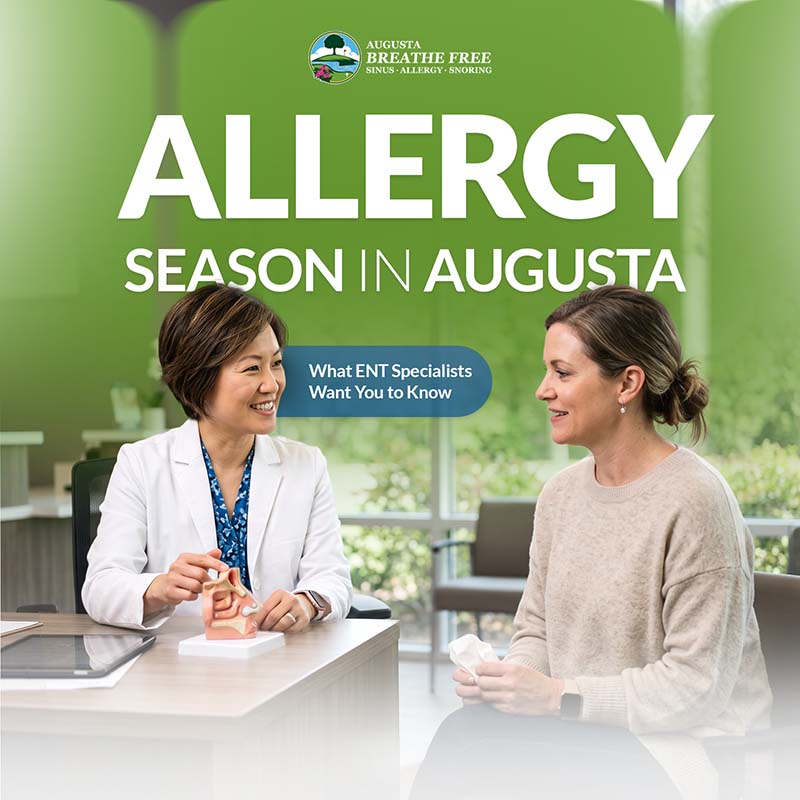
For many people in Augusta, allergy season doesn’t arrive all at once—it seems to blend from one season into the next. Just as tree pollen begins to fade, grass pollen takes its place. Later in the year, ragweed becomes a new source of irritation, while periods of rain and humidity can increase mold levels. It’s no surprise that many local residents feel like they’re dealing with allergies for much of the year rather than just a few weeks.
At Augusta Breathe Free Sinus & Allergy Centers, we often see patients who believe they’re experiencing “another bad allergy season” when persistent inflammation, chronic sinusitis, or another ear, nose, and throat condition may also be contributing to their symptoms. Understanding how allergies affect your nose and sinuses is the first step toward finding lasting answers.
Augusta’s Environment Creates a Long Allergy Season
Living in the Central Savannah River Area means experiencing a variety of environmental allergens throughout the year.
Spring often brings heavy tree pollen from oak, pine, and other native trees. As temperatures rise, grass pollen becomes more common, followed by ragweed in late summer and fall. Warm temperatures and periods of high humidity can also encourage mold growth, creating additional triggers both indoors and outdoors.
Instead of one clearly defined allergy season, many Augusta residents experience a series of overlapping allergy cycles that keep the nasal passages inflamed for months at a time.
Allergies Do More Than Cause Sneezing
Sneezing and itchy eyes are often the first symptoms people notice, but allergies can affect much more than that.
When your immune system reacts to allergens, it releases chemicals that cause the tissues inside your nose to swell. As inflammation increases, the small openings that allow your sinuses to drain become narrower, making it harder for mucus to move normally.
That may lead to symptoms such as:
- Persistent nasal congestion
- Postnasal drip
- Facial pressure
- Frequent throat clearing
- Ear fullness
- A reduced sense of smell
- Difficulty breathing through your nose
Many patients also notice that poor nasal airflow affects their sleep, leaving them tired during the day and making it harder to concentrate at work or enjoy everyday activities.
Why Allergies Can Lead to Ongoing Sinus Problems
One of the biggest misconceptions about allergies is that they’re limited to seasonal discomfort.
Persistent inflammation can interfere with the way your sinuses function. As drainage slows, mucus may collect inside the sinus cavities instead of clearing normally. Persistent nasal inflammation may contribute to ongoing sinonasal symptoms and, in some patients, may occur alongside conditions such as chronic sinusitis.
That’s why some people continue experiencing congestion and facial pressure long after pollen counts begin to decrease.
Rather than viewing allergies and sinus disease as completely separate conditions, ENT specialists often evaluate how one may be affecting the other.
Not Every Stuffy Nose Is Caused by Allergies
Because allergy symptoms are so common in Augusta, it’s easy to assume congestion is always caused by pollen.
However, similar symptoms may also be associated with chronic sinusitis, nasal polyps, a deviated septum, or other conditions affecting the nose and sinuses.
If symptoms continue despite changing seasons or seem to return repeatedly throughout the year, it may be time to look beyond environmental allergies alone.
An accurate diagnosis with an ENT in Augusta begins with understanding what’s causing the inflammation—not simply treating the congestion.
How ENT Specialists Help Find the Underlying Cause
An ENT evaluation focuses on understanding why symptoms continue rather than simply confirming that allergies are present.
Your provider will discuss when symptoms occur, whether they change throughout the year, how they affect your sleep and daily activities, and whether you’ve experienced recurring sinus infections, facial pressure, or changes in your sense of smell.
Depending on your symptoms, your evaluation may include allergy testing, nasal endoscopy, or other diagnostic tools that provide a clearer understanding of what’s happening inside your nose and sinuses.
The goal is to identify the factors contributing to your symptoms so treatment recommendations are based on the underlying cause.
How Do I Know It’s Time to Stop Waiting and Get Checked?
Seasonal allergies are common, but persistent symptoms shouldn’t become something you simply expect every year.
An ENT evaluation may be appropriate if:
- Congestion lasts for several weeks.
- Symptoms return during multiple seasons.
- You experience recurring sinus infections.
- Facial pressure has become a regular problem.
- Nasal blockage affects your sleep.
- You’re unsure whether allergies or another ENT condition is responsible.
An evaluation doesn’t necessarily mean you’ll need a procedure. More often, it provides answers that help explain why symptoms continue and what treatment options may be appropriate.
Better Answers Begin with Understanding the Cause
Living in Augusta means enjoying four distinct seasons, but it also means facing environmental conditions that can challenge your sinuses throughout much of the year. If allergy symptoms continue to interfere with your sleep, work, or daily activities, understanding what’s behind them is the first step toward improving your quality of life.
At Augusta Breathe Free Sinus & Allergy Centers, we help patients throughout Augusta and surrounding Georgia and South Carolina communities better understand persistent allergy, sinus, and ear, nose, and throat concerns through personalized evaluations and thoughtful care. Call us to schedule a consultation and learn more about what’s causing your symptoms and the treatment options available to help you breathe more comfortably.