

What Does a Sinus CT Scan Show, and When Might an ENT Recommend One?
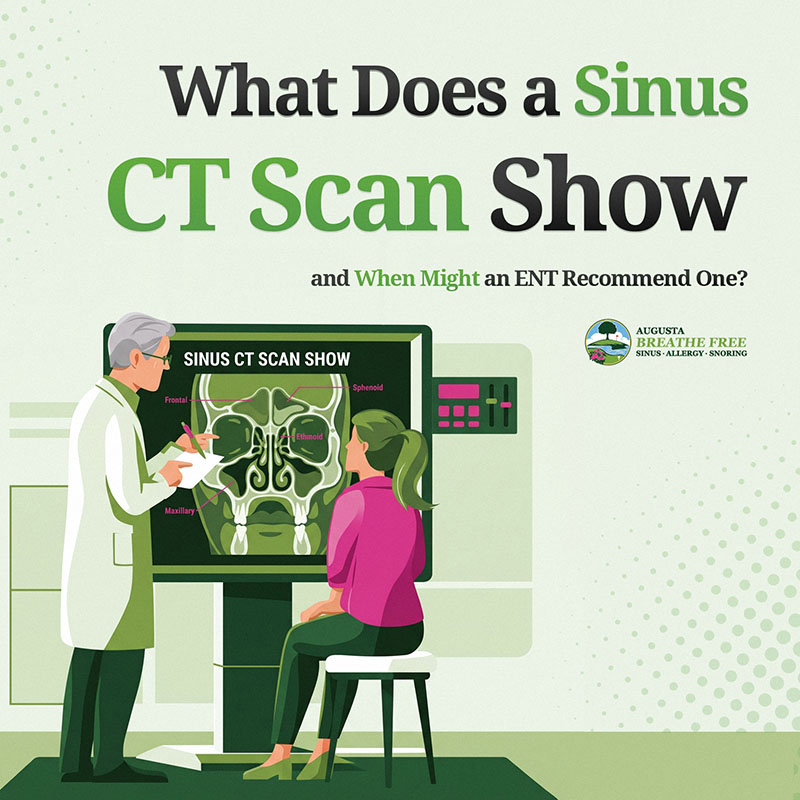
Persistent nasal congestion, facial pressure, reduced smell, and recurring sinus infections can be difficult to evaluate based on symptoms alone. Several conditions can cause similar problems, and some parts of the sinuses cannot be fully seen during a routine office examination.
When an ENT needs a more detailed view of the nasal and sinus anatomy, a sinus CT scan may be recommended. The scan can show inflammation, trapped fluid, blocked drainage pathways, nasal polyps, and structural differences that may be contributing to ongoing symptoms.
At Augusta Breathe Free, we help patients understand what may be causing persistent sinus concerns and whether CT imaging may provide useful information.
Direct Answer: What Can a Sinus CT Scan Show?
A sinus CT scan creates detailed images of the nasal passages, sinus cavities, drainage pathways, and surrounding bone. It may show:
- Thickening or inflammation of the sinus lining.
- Trapped fluid or mucus.
- Blocked or narrowed sinus drainage pathways.
- Nasal polyps or other soft-tissue changes.
- A deviated septum.
- Anatomical differences affecting airflow or drainage.
- Changes associated with chronic sinus disease.
- Certain dental problems affecting the nearby sinuses.
- Less common abnormalities that require further evaluation.
An ENT may recommend a CT when symptoms are persistent or recurring, initial treatment has not provided adequate relief, complications are suspected, or detailed anatomical information is needed for treatment planning.
What Is a Sinus CT Scan?
A CT scan, or computed tomography scan, uses X-ray technology and computer processing to create cross-sectional images of the body.
Unlike a standard X-ray, which provides a limited flat image, a CT scan captures the sinuses from multiple angles. The images can then be reviewed in different planes to show the complex spaces inside the face.
A sinus CT generally provides detailed views of the:
- Maxillary sinuses in the cheek area.
- Frontal sinuses above the eyes.
- Ethmoid sinuses between the eyes.
- Sphenoid sinuses deeper behind the nasal cavity.
- Nasal septum.
- Turbinates.
- Sinus openings and drainage pathways.
- Surrounding bone and nearby structures.
Most routine sinus CT scans are completed without contrast material. Contrast may be considered in certain situations when an ENT or radiologist needs additional information about a mass, complication, blood vessel, or surrounding tissue.
What Happens During a Sinus CT Scan?
During a conventional CT scan, you typically lie on a table that moves through a large, ring-shaped scanner. The machine captures multiple X-ray images of the head and sinuses.
Some ENT offices use a compact cone-beam CT scanner that allows the patient to sit or stand while images are obtained. The exact process depends on the equipment being used.
The scan itself is generally:
- Noninvasive.
- Painless.
- Completed within several minutes.
- Performed without injections for most routine sinus evaluations.
You may be asked to remove glasses, jewelry, hearing aids, or other metal objects that could interfere with the images. Tell the imaging team if you are or may be pregnant before the scan is performed.
What Can a Sinus CT Reveal?
Sinus Inflammation
Healthy sinuses are mostly filled with air and appear dark on a CT scan. Inflamed sinus lining, mucus, or fluid may appear as gray or white areas.
A CT may show mucosal thickening, partial opacification, or complete opacification of a sinus. These findings can help an ENT determine which sinuses are affected and how extensive the inflammation appears to be.
However, inflammation on a CT does not automatically mean an active bacterial infection is present. Imaging findings must be interpreted alongside symptoms, their duration, and the physical examination.
Trapped Fluid or Mucus
When a sinus opening becomes blocked, mucus may accumulate inside the cavity. A CT can show fluid or material that may not be visible during a nasal examination.
Trapped fluid may occur with an acute infection, chronic inflammation, or impaired sinus drainage. The image alone cannot always determine the exact cause.
Blocked Sinus Drainage Pathways
The sinuses drain through small openings into the nasal cavity. Swelling, polyps, or anatomical narrowing can interfere with this process.
A CT can show whether a drainage pathway appears narrowed or obstructed. This information may be useful when symptoms keep returning despite medication or when an ENT is considering a procedure to improve drainage.
Nasal Polyps
Nasal polyps are soft, noncancerous growths associated with chronic inflammation. They may obstruct airflow, reduce the sense of smell, or interfere with sinus drainage.
A CT can help show the location and extent of soft-tissue changes that may represent polyps. Nasal endoscopy and the clinical examination are also important because other growths can sometimes resemble polyps on imaging.
A Deviated Septum
A deviated septum occurs when the wall separating the two nasal passages is significantly off-center.
A CT can show the shape and position of the septum and how it relates to the surrounding nasal and sinus structures. Not every septal deviation causes symptoms or requires treatment. The finding is meaningful when it matches the patient’s breathing difficulties or other clinical concerns.
Enlarged Turbinates and Other Anatomical Differences
The turbinates are structures inside the nose that warm, humidify, and filter inhaled air. When they become enlarged, they may contribute to nasal obstruction.
A CT may also reveal variations in the small bones and air cells surrounding the sinuses. These differences are common and do not necessarily indicate disease, but they may influence drainage or help an ENT plan a procedure safely.
Dental-Related Sinus Problems
The roots of the upper teeth sit close to the maxillary sinuses. Infections or other dental problems can sometimes contribute to inflammation in a nearby sinus, often on one side.
A sinus CT may show findings that suggest a dental source. Additional evaluation by a dentist or oral healthcare professional may then be appropriate.
Less Common Abnormalities
Most sinus CT findings involve inflammation or normal anatomical variation. Occasionally, imaging may identify a mass, bone change, injury, or another abnormality that requires additional testing.
Persistent one-sided symptoms, repeated nosebleeds, facial numbness, or unusual examination findings may make imaging especially important.
What Can a CT Show That an Office Examination Cannot?
A routine nasal examination allows an ENT to inspect the accessible portions of the nasal cavity. Nasal endoscopy provides a more detailed view and may reveal inflammation, drainage, polyps, or structural narrowing.
However, an endoscope cannot look through bone or show every part of the deeper sinus cavities. A CT provides information about areas that cannot be directly visualized, including the frontal, sphenoid, and deeper ethmoid sinuses.
The two evaluations serve different purposes:
- An office examination shows what the nasal tissue looks like directly.
- Nasal endoscopy provides a closer view of the nasal passages and accessible drainage areas.
- A sinus CT shows the deeper sinus cavities, surrounding bone, and overall anatomy.
A CT does not replace an examination, and an examination does not always provide the anatomical detail available from imaging.
When Might an ENT Recommend a Sinus CT?
Not every episode of congestion or sinus infection requires imaging. A CT may be considered when the result is likely to influence diagnosis or treatment.
Possible reasons include:
- Nasal or sinus symptoms lasting 12 weeks or longer.
- Recurring sinus infections.
- Symptoms that return soon after treatment.
- Persistent nasal obstruction.
- Reduced sense of smell.
- Significant or recurring facial pressure.
- One-sided symptoms that require further evaluation.
- Suspected nasal polyps.
- Concern about a complication.
- Uncertain examination findings.
- Planning for balloon sinuplasty or sinus surgery.
For suspected chronic sinusitis, imaging may be used to document inflammation and determine which areas are affected after appropriate medical evaluation.
Is a CT Needed for an Ordinary Sinus Infection?
Usually not. Many uncomplicated acute sinus infections can be evaluated based on symptoms, their duration, and an examination.
A CT is generally not needed for a short episode of congestion associated with a cold. Imaging becomes more useful when symptoms persist, repeatedly return, fail to respond as expected, or raise concern about another condition.
Obtaining a CT too early during a cold can show temporary inflammation that may resolve on its own. This is one reason the timing of imaging matters.
Can a CT Confirm a Bacterial Sinus Infection?
Not by itself. A CT can show inflammation, fluid, or blocked drainage, but it cannot always determine whether those findings are caused by a virus, bacteria, allergies, or another inflammatory condition.
Someone can also have changes on a CT without experiencing significant symptoms. For that reason, imaging should not be interpreted in isolation.
An ENT considers the CT findings alongside:
- The duration and pattern of symptoms.
- Nasal examination or endoscopy findings.
- Previous infections and treatments.
- Allergy history.
- The severity of congestion, drainage, or facial pressure.
- Other possible explanations for the symptoms.
What If the Sinus CT Is Normal?
A normal CT can still provide useful information. It may suggest that ongoing symptoms are not being caused by significant sinus inflammation or blocked sinus cavities.
When the scan is clear, an ENT may consider other possible causes, such as:
- Allergic rhinitis.
- Nonallergic rhinitis.
- Migraine or another headache disorder.
- Temporomandibular joint problems.
- A nasal valve problem.
- A structural obstruction not involving the sinuses.
- Nerve-related facial pain.
A normal scan may help prevent unnecessary antibiotics or sinus procedures and redirect the evaluation toward another likely source.
Does a Sinus CT Involve Radiation?
Yes. CT imaging uses ionizing radiation. The amount depends on the scanner and imaging protocol.
ENT practices and imaging centers generally use protocols designed to obtain the necessary information while limiting radiation exposure. Imaging should be recommended when its potential clinical value outweighs the exposure.
Patients should tell their provider about previous imaging and disclose a current or possible pregnancy before undergoing a CT scan.
What Happens After the Scan?
The next step depends on what the scan shows and whether those findings match the symptoms.
Treatment may include:
- Saline rinses.
- Prescription nasal sprays.
- Allergy evaluation or treatment.
- Medication for chronic inflammation.
- Treatment for nasal polyps.
- Management of a dental condition.
- A procedure to improve sinus drainage.
- Septoplasty or another structural treatment when appropriate.
A CT finding does not automatically mean surgery is necessary. In many cases, the scan simply helps clarify the diagnosis and guide medical treatment.
If a procedure is being considered, CT images can also help the ENT understand the patient’s individual anatomy and plan treatment more precisely.
When Should You Seek Prompt Medical Care?
Most chronic sinus symptoms are not emergencies. Prompt evaluation is appropriate for severe or rapidly worsening symptoms such as:
- Swelling or redness around an eye.
- Vision changes.
- Severe or unusual headache.
- Facial swelling.
- Neck stiffness.
- Confusion.
- High fever accompanied by worsening symptoms.
- Neurological changes.
These symptoms can have several causes and require medical evaluation rather than waiting for a routine imaging appointment.
Learn Whether Sinus Imaging May Be Appropriate
A sinus CT can provide detailed information about inflammation, fluid, polyps, drainage pathways, and structural differences that cannot always be fully evaluated during an office examination. It is most useful when the findings are considered alongside your symptoms and clinical examination.
Augusta Breathe Free provides sinus and ENT care for patients in Augusta and surrounding Georgia communities. Contact our team to schedule an evaluation and determine whether a sinus CT or another diagnostic approach may be appropriate for your symptoms.